
Hoping Against Hope
he believed that he would become “the father of many nations,”....

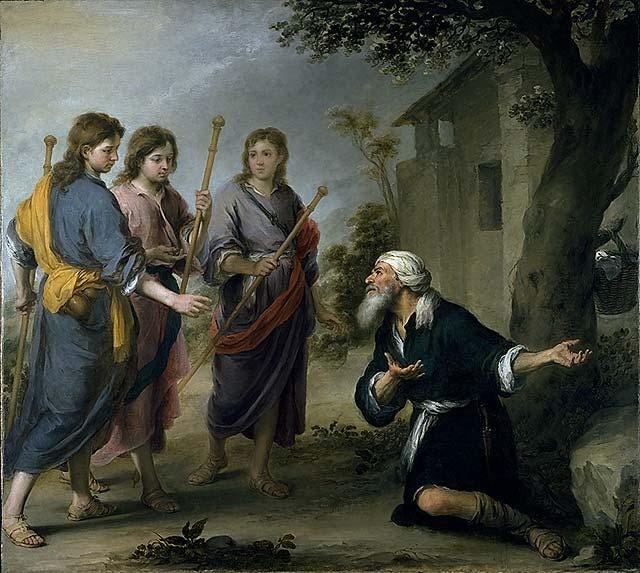
From a sermon delivered at Saint Peter’s Episcopal Church in Sheboygan Falls, Wisconsin | June 7, 2026
There is a phrase in today’s reading from Romans that has been lingering with me all week.
Paul says that Abraham, “hoping against hope, believed.”
Hoping against hope.
What a strange phrase.
Hope usually depends on some type of evidence. We hope because we can see a path forward. We hope because circumstances suggest things might improve. We hope because there are signs that things are moving in the right direction.
But hoping against hope is something altogether different.
It is hope when there is no obvious reason to hope.
It is trust when the evidence points in the opposite direction.
It is faith when every practical voice says, “This is impossible.”
And perhaps that is the thread connecting all of today’s readings.
Not simply faith.
Not simply mercy.
But the God who brings life out of places where life seems impossible.
We often read the story of Abraham as an example of great faith. And certainly it is. But Paul’s focus is actually elsewhere.
Listen carefully.
Paul describes Abraham’s body as “already as good as dead.” Sarah’s womb is barren. The promise appears absurd.
And then Paul says Abraham believed in the God “who gives life to the dead and calls into existence the things that do not exist.”
The hero of the story is not Abraham.
The hero is God.
The God who specializes in impossible situations.
The God who creates futures where none seem possible.
The God who refuses to accept death’s verdict.
The same thing is happening in Hosea.
The people have wandered far from God. The relationship appears broken. The nation itself is in crisis.
Yet Hosea dares to say:
“After two days he will revive us; on the third day he will raise us up.”
As Christians, we immediately hear echoes of Easter in those words. And rightly so.
But Hosea’s original audience wasn’t thinking about resurrection after death.
They were thinking about restoration after devastation.
They were asking whether God could bring life to something that appeared beyond saving.
And Hosea’s answer is yes.
The answer is always yes.
Then we come to the Gospel.
Matthew is sitting at a tax booth.
Now we know this story so well that we miss how shocking it would have been.
To many of Jesus’ contemporaries, Matthew’s life was already over.
Not physically… Spiritually… Morally… Socially.
He had chosen the wrong side.
He was one of them.
The kind of person respectable religious people avoided.
Yet Jesus looks at him and sees something nobody else sees.
Life… Potential… Possibilities… A future.
And with two simple words—”Follow me”—everything changes.
Then comes the woman who has been hemorrhaging for twelve years.
Twelve years.
Twelve years of disappointment.
Twelve years of unanswered prayers.
Twelve years of wondering whether things would ever be different.
How many people eventually stop hoping after twelve years?
How many people convince themselves that this is simply the way life will be?
Yet somehow she still reaches for Jesus.
Somehow she still believes.
Not because she has evidence.
Not because she has certainty.
But because something within her refuses to surrender completely to despair.
And finally we come to the synagogue leader.
His daughter has died.
Not sick… Not dying… Dead.
The mourners have already gathered.
The funeral has already begun.
Everyone around him accepts the reality of death.
Everyone except him.
Everyone except Jesus.
Do you see the pattern?
Again and again throughout these readings we encounter situations that appear finished.
A broken covenant… A barren womb… A compromised tax collector… A woman trapped in suffering… A dead child.
Again and again we encounter places where life appears impossible.
And again and again God acts.
I wonder if this is because we often misunderstand where God does God’s best work.
We imagine that God works most powerfully in our strengths.
Our successes… Our accomplishments… Our certainties.
But Scripture tells a different story.
God seems strangely drawn to barren places.
To wildernesses… To failures… To endings… To situations everyone else has given up on.
Spiritual life is not primarily about becoming stronger.
It is about becoming honest.
Honest enough to acknowledge where we have stopped hoping.
Honest enough to name the places in our lives that feel dead.
Perhaps it is a relationship… a dream… a wound you have carried for years… it is your prayer life… perhaps it is your sense of purpose… it is your trust in the Church… your trust in yourself.
We all carry places where death has whispered its verdict.
Places where we have quietly concluded, “Nothing will ever change.”
Yet the central claim of the Christian faith is that death never gets the last word.
Not in Hosea.
Not in Abraham.
Not in Matthew.
Not in the hemorrhaging woman.
Not in the story of the little girl.
And ultimately, not in the story of Jesus.
Because friends, the resurrection is not merely an event that happened two thousand years ago.
It reveals something about the very character of God.
God is always bringing life out of death.
Always creating possibilities where we see none.
Always calling us beyond the limits of what we think is possible.
This is why Christian hope is different from optimism.
Optimism depends on circumstances.
Hope depends on God.
Optimism says things will probably work out.
Hope says that even when they don’t work out the way we expect, God is still present.
Still working… Still creating… Still raising the dead.
Abraham hoped against hope.
The woman reached out against all evidence.
The synagogue leader kept believing when everyone else had given up.
And perhaps that is the invitation before us today.
Not to manufacture stronger faith.
Not to pretend everything is fine.
But simply to bring our dead places before the God who gives life to the dead.
Because the good news of the Gospel is this:
The places where we see only endings are often the very places where God is preparing a resurrection.
Amen.