
When Jesus had received the wine, he said, “It is finished.
A Good Friday sermon delivered at Saint Peter's Episcopal | Sheboygan Falls, Wisconsin on April 3, 2026

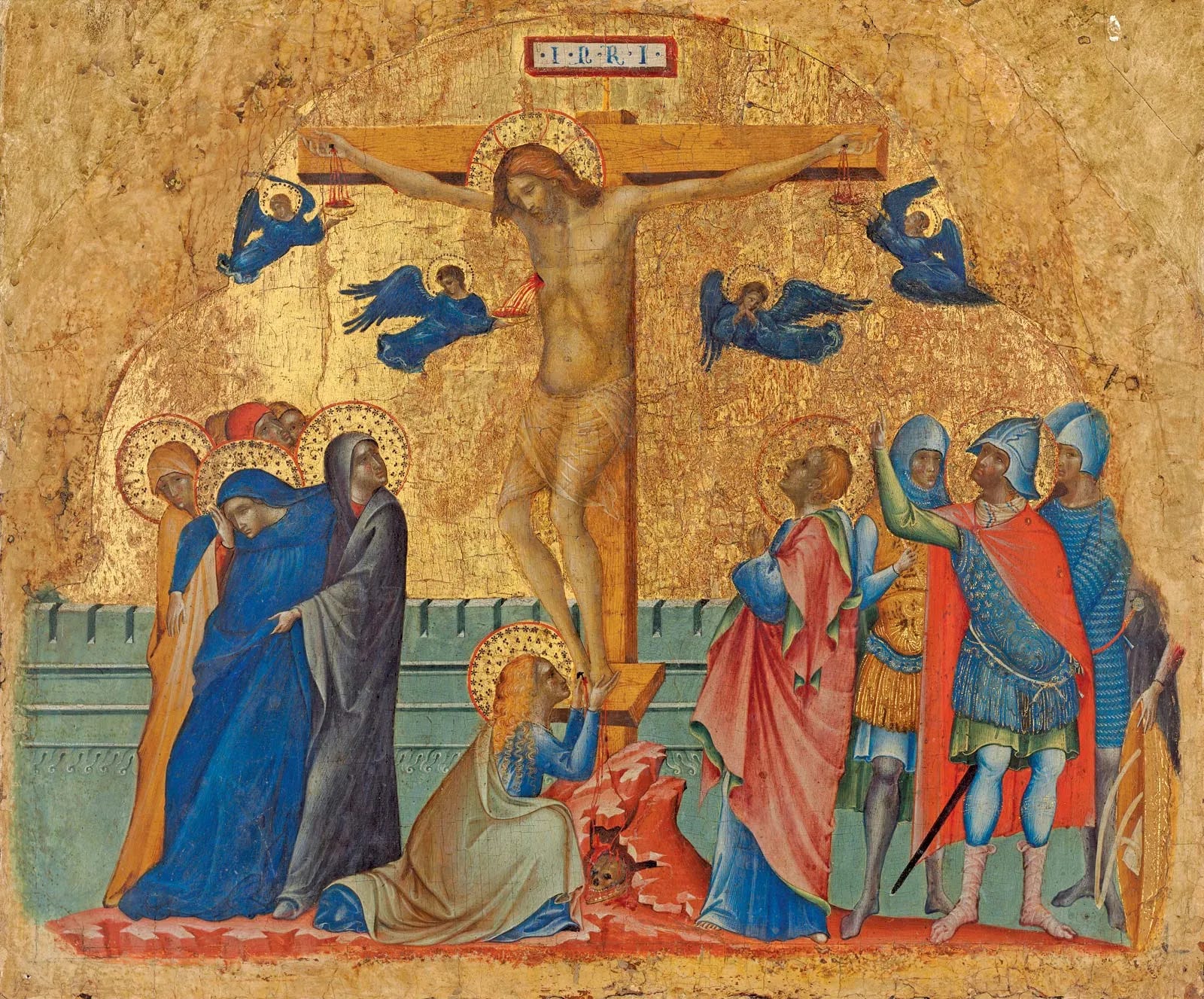
There is a question that echoes beneath all of these readings—a question we rarely ask out loud, but one we carry nonetheless:
What does God do with suffering?
Not in theory. Not in abstract thinking.
But real suffering—rejection, betrayal, injustice, silence, pain.
Because if we are honest, suffering often feels like absence.
Like distance.
Like being abandoned.
“My God, my God, why have you forsaken me?”
The cry of the psalmist is not polite. It is not restrained. It is raw. It is human. And it is a cry that has been prayed in hospital rooms, at gravesides, in moments of quiet despair, and in the hidden places of the heart.
And it is a cry that Jesus himself says.
But here is the mystery these readings invite us to:
God does not answer suffering by removing it.
God answers suffering by entering it.
Isaiah gives us the image—the suffering servant.
Despised. Rejected. Wounded. Crushed.
And yet—“he has borne our infirmities… by his bruises we are healed.”
This is not suffering for suffering’s sake.
This is suffering taken up into the very work of redemption.
The servant does not suffer instead of God’s presence—
the servant suffers as the very place where God’s presence is revealed.
And then we come to John’s Gospel reading.
There is something important about the way Jesus moves through these events.
He is not swept along by them. He is not overpowered by them.
He steps forward in the garden: “Whom are you looking for?”
He refuses violence when he says: “Put your sword back.”
He speaks truth before power.
He carries the cross.
He remains.
Again and again, we see not a victim—but one who chooses.
“Am I not to drink the cup that the Father has given me?”
This is not resignation.
This is obedience.
This is love.
And Hebrews helps us name what is happening beneath the surface:
“He learned obedience through what he suffered… and became the source of eternal salvation.”
Not because suffering is good.
But because love is willing to go there.
All the way there.
Even to the cross.
Even into death.
And then, at the very end, Jesus speaks a single word:
“It is finished.”
Not, “I am finished.”
Not, “It is over.”
But: It is accomplished.
What is accomplished?
Everything that Isaiah foresaw.
Everything the psalm cried out in longing.
Everything Hebrews proclaims in hope.
Sin borne.
Brokenness carried.
Separation bridged.
Love poured out completely.
“It is finished.”
Which means that suffering—while still real, still painful, still present—
is no longer empty.
It has been entered.
It has been held.
It has been redeemed.
And so the cross stands at the center of our faith not as a symbol of despair and sadness,
but as the place where even the worst the world can do
is met by the unstoppable love of God.
A love that does not turn away.
A love that does not give up.
A love that goes all the way through.
So what does this mean for us?
It does not mean we should seek suffering.
It does not mean we pretend pain is good.
But it does mean this:
There is no place you can go—not even into your deepest sorrow—
where Christ has not already gone.
There is no wound you carry that is unknown to him.
No grief he does not hold.
No cry he does not echo.
And more than that—there is no suffering that is beyond redemption.
Because the cross tells us that even there—
especially there—
God is at work.
Quietly.
Faithfully.
Transforming what seems like an ending
into the beginning of something new.
So we come to the cross not with easy answers,
but with trust.
Trust that love is stronger than suffering.
Trust that God is present even in silence.
Trust that what feels unfinished in us
is already being gathered into God’s finished work.
“It is finished.”
And because it is—
nothing, not even suffering,
is wasted.
Amen.
Great reminder that also with suffering comes all the things that help it not just be suffering. In hard times we are reminded of the people and the presence that supports us.